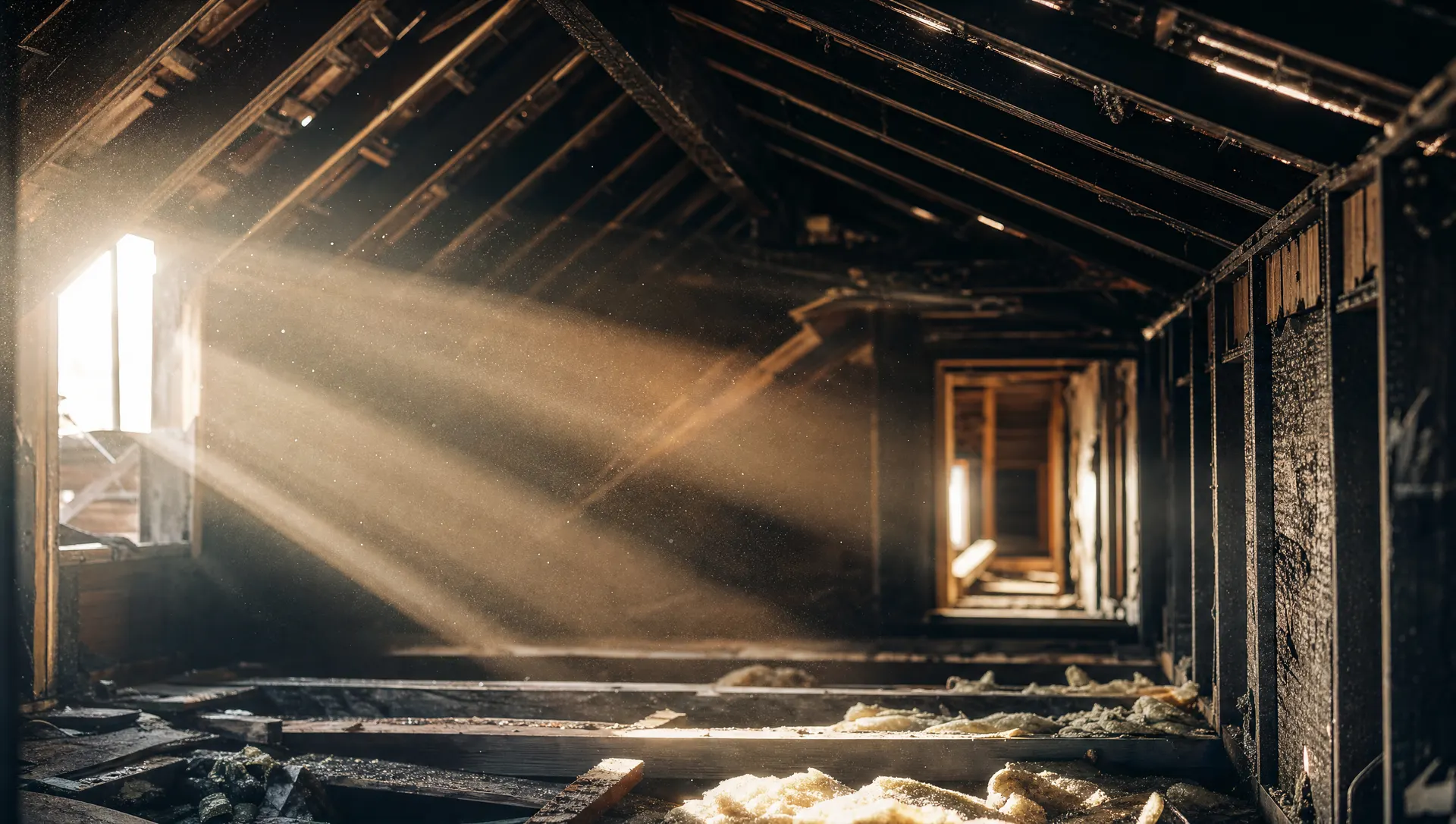
Soot Cleanup in O'Fallon, MO
Soot is not just dirt that happens to be black. It is acidic, it is fine enough to travel through the smallest gaps in a house, and it keeps reacting with whatever it lands on for as long as it sits there. A chrome faucet or a glass shower door that looked fine the day of the fire can be permanently etched a week later if the soot on it was never cleaned off. O'Fallon Fire Damage handles soot cleanup across O'Fallon and St. Charles County — walls, ceilings, HVAC systems, fixtures, and belongings — using methods matched to what actually burned. The right method depends entirely on the surface and the soot type, which is why soot cleanup is its own specialty rather than a step tacked onto general house cleaning.
This page covers cleanup after the fact. If flames or smoke are still active anywhere on the property, that is a 911 call first, not a cleanup question.
What Soot Cleanup Involves
- Identifying the type of soot involved — dry soot from wood and paper behaves differently than the wet, sticky soot from burning synthetics and plastics common in modern furniture and finishes
- Dry-sponge and HEPA vacuum cleaning for surfaces where wet cleaning would smear residue deeper in rather than lift it off
- Wet cleaning and degreasing for surfaces that can handle it, especially kitchens after a grease or cooking fire
- Cleaning inside HVAC systems and ductwork, since soot travels through moving air far past the room where the fire actually happened
- Treatment of metal fixtures, glass, and hard surfaces before soot's acidity causes permanent etching or discoloration
- Soot removal from salvageable belongings — some items clean up fully, others do not, and sorting that out early saves time and money
- Pre- and post-cleaning documentation so the extent of soot damage is on record for your insurance claim, not just described from memory later
How Soot Travels Through an O'Fallon Home
The two-story, open-concept floor plans common across O'Fallon's subdivisions mean soot rarely stays confined to the room where the fire started. Vaulted great rooms and open stairwells let fine soot particles rise and drift into upstairs bedrooms and hallways, and central HVAC systems pull airborne soot into ductwork and distribute it through registers across the house. A kitchen fire in a typical subdivision floor plan can leave a fine soot film in an upstairs bathroom that never had visible smoke exposure. That is why soot cleanup here starts with figuring out how far it actually traveled — inside vents, on top of cabinets, behind ceiling fans — rather than just cleaning the room that looks the worst. Homes with vaulted ceilings over the main living area, common in a lot of O'Fallon's two-story plans, present their own challenge too — soot settles on high surfaces that are hard to reach and easy to overlook during a quick pass, and it sits there discoloring paint and trim until someone specifically checks.
When to Call for Soot Cleanup
Call as soon as the fire department has released the property, even if the soot looks confined to one room. Soot's acidity means the clock matters — metal fixtures, electronics, and finished surfaces are more likely to be saved the sooner residue comes off them, and delayed cleanup on some materials turns a wipe-down into a full replacement. Do not run ceiling fans, HVAC systems, or open windows to "air it out" before soot is addressed; moving air spreads fine particles into rooms that were otherwise untouched by the fire. It is also worth calling even when the visible soot is light — a thin film that barely shows on drywall can still be enough to etch metal fixtures or leave a lingering odor if it sits untreated for more than a few days.
What Soot Cleanup Typically Costs
For soot confined to a single room with light residue, cleanup typically runs several hundred to around fifteen hundred dollars. Whole-house soot cleanup, particularly when HVAC systems and multiple rooms are involved, typically runs higher — often two to six thousand dollars depending on square footage and how many surfaces and fixtures need individual treatment. Cost drivers include the type of soot (synthetic-material soot generally costs more to remove than dry wood-and-paper soot), how many rooms and surfaces are affected, whether ductwork needs cleaning, and how long the soot sat before cleanup started. Kitchens and rooms with a lot of hard, glossy surfaces — tile, laminate, painted trim — often clean up faster and cheaper than rooms heavy in fabric, carpet, and upholstered furniture, since soft materials tend to hold soot more stubbornly.
Can I clean soot myself with a household vacuum or a rag?
Please do not, beyond very minor, contained spots. A household vacuum lacks the filtration to trap fine soot particles, so vacuuming soot often just redistributes it into the air you are breathing. Wiping or rubbing soot with a dry rag on the wrong surface smears it deeper into the material instead of lifting it off. Different soot types and surfaces need different methods, and getting it wrong can turn a cleanable surface into a replacement.
Does soot cleanup have to happen before smoke odor treatment?
Generally yes, or at least alongside it. Soot residue itself carries odor, so leaving soot in place while treating for smell tends to produce a temporary result — the smell can return as the leftover soot continues to off-gas. Our smoke and odor removal work is closely coordinated with soot cleanup for exactly this reason.
Is it safe to have kids or pets around during soot cleanup?
Better to keep them out of the affected areas until cleanup is complete. Soot contains combustion byproducts from whatever burned, which in a modern home often includes synthetic materials, and disturbing it during cleaning can put fine particles into the air. Once an area has been cleaned and cleared, it is fine to return to normal use.
Get the Residue Off
The longer soot sits, the more it can permanently mark the surfaces underneath it. Tell us what happened and we will get soot cleanup moving before it does any more damage than the fire already did, anywhere in the O'Fallon area.
Need Help in O'Fallon Right Now?
Tell us what you need and we'll get back to you fast with a free, no-pressure quote.