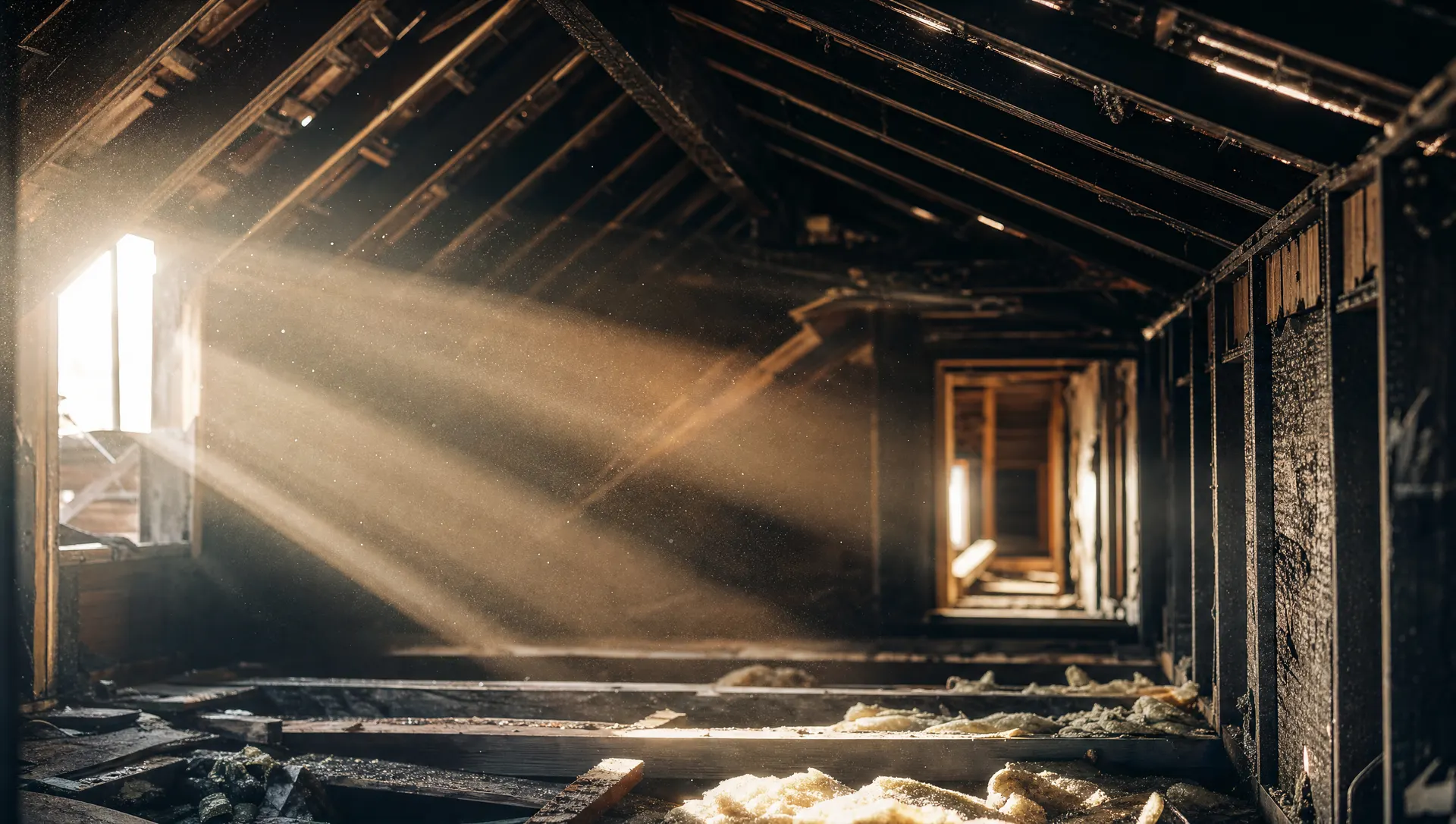
Fire Damage Restoration in O'Fallon, MO
Fire damage restoration is the umbrella term for everything that happens between the fire department packing up their hoses and your house being livable again. It covers securing the structure, cleaning soot and ash, removing smoke odor, drying out firefighting water, and coordinating the repair work that follows. O'Fallon Fire Damage provides fire damage restoration across O'Fallon and St. Charles County — one point of contact for a process that otherwise means juggling several different contractors while you are also dealing with an insurance claim. That matters more than it sounds like it should: a fire loss touches structure, contents, air quality, and finishes all at once, and a scattered set of separately hired crews tends to leave gaps between them.
If there is still fire, smoke, or an active emergency at the property, call 911 before anything else. This page covers the recovery work that starts once the fire department has cleared the scene and the property is back in your hands.
What Fire Damage Restoration Includes
- Structural assessment — checking what survived, what did not, and what needs a licensed electrician or a structural professional before any other work continues
- Board-up and roof tarping to secure the property against weather and unwanted entry — full detail on our board-up and roof tarping page
- Soot and ash removal from walls, ceilings, HVAC systems, and hard surfaces before soot's acidity causes lasting damage — see soot cleanup
- Smoke odor treatment throughout the structure, not just the room where the fire started — see smoke and odor removal
- Extraction and drying of the water used to fight the fire — see water damage from firefighting
- Content assessment — sorting what can be cleaned and saved from what cannot
- Debris and damaged-material removal — clearing out what cannot be saved so drying and cleaning crews can actually get to the surfaces underneath
- Documentation for your insurance claim at every stage of the work, photographed and logged as it happens
How We Approach a Fire-Damaged Home in O'Fallon
O'Fallon's housing stock is mostly large-subdivision construction from the 1990s through the 2010s — two-story floor plans, attached garages, open living spaces, and shared HVAC ductwork running through the whole house. That construction style affects how fire damage restoration actually plays out here. A garage fire, one of the most common origin points in neighborhoods like these, can travel into the attic and across roof trusses connecting to the whole house before it ever shows visible damage inside the living space. An open-concept great room lets smoke spread from a kitchen fire into bedrooms on the far side of the house fast, and central HVAC systems pull that smoke through ductwork into rooms that never got close to a flame. Restoration work here has to account for how far smoke and soot actually traveled, not just where the fire itself burned. Many of these homes also carry finished basements and multiple upstairs bedrooms, which means a fire on one level can leave a restoration scope that spans three levels once smoke migration, firefighting water, and HVAC contamination are all mapped out.
When to Call for Fire Damage Restoration
Call once the fire department has released the property and you are looking at what is left — whether that is one room with smoke damage or a fire that reached the attic and multiple rooms. You do not need to wait until your insurance claim is fully sorted out to start; board-up and initial mitigation typically need to happen the same day regardless of where the claim stands, and early documentation actually supports the claim rather than working against it. If you are unsure whether what you are looking at needs a full restoration process or just a cleaning, that is a reasonable first question to ask when you reach out. Even a fire that looks like it stayed in one room is worth a second look — smoke and soot are good at reaching places a quick walkthrough will miss, including inside cabinets, behind appliances, and above drop ceilings.
What Fire Damage Restoration Typically Costs
Cost tracks severity closely. A contained fire limited to smoke and soot in a room or two, with no structural loss, typically runs a few thousand dollars for cleanup and treatment. A fire that reached framing, the attic, or several rooms typically moves into five figures once mitigation, drying, and reconstruction coordination are combined, and a major structure fire can run considerably higher than that. The core cost drivers are how much square footage was affected, whether the fire reached structural framing or stayed contained to finishes and contents, how much water was used to fight it, and how far smoke and soot traveled through the house. The age and finish level of the home plays a role too — a newer subdivision home with builder-grade drywall and carpet is generally faster and less expensive to restore than one with hardwood, custom trim, or higher-end finishes that need more careful, slower cleaning methods. We give real numbers after seeing the property in person — anyone pricing a fire loss sight unseen is guessing.
Do I need to move out during fire damage restoration?
Sometimes. If the fire affected a small, isolated area and the rest of the home has power, water, and safe air quality, you may be able to stay. If the kitchen is unusable, if smoke odor is heavy throughout, or if the fire department has restricted access to part of the structure, temporary relocation is common — and often covered under the additional living expenses portion of a homeowners policy. We can tell you which situation you are in once we have assessed the property, usually during the first walkthrough rather than after several days of guessing.
Will insurance pay for all of this?
Most standard homeowners policies cover fire damage, including the resulting smoke and water damage, since it all stems from one covered event. What is covered in your specific case depends on your policy's dwelling, personal property, and additional living expense provisions. We document the loss and the work performed to support your claim, but the claim itself is between you and your insurance company.
Can you start before my insurance claim is approved?
Board-up, tarping, and other immediate mitigation typically can start right away — most policies expect reasonable steps to prevent further damage, and delaying that to wait on claim approval can work against you. Larger reconstruction work generally does wait for the claim to move forward, since it needs to match the approved scope of work.
Start the Recovery
Once the fire department has cleared your property, every day the structure sits open and untreated is a day soot etches deeper and smoke smell settles further in. Tell us what happened and we will get the recovery process started, anywhere in the O'Fallon area.
Need Help in O'Fallon Right Now?
Tell us what you need and we'll get back to you fast with a free, no-pressure quote.